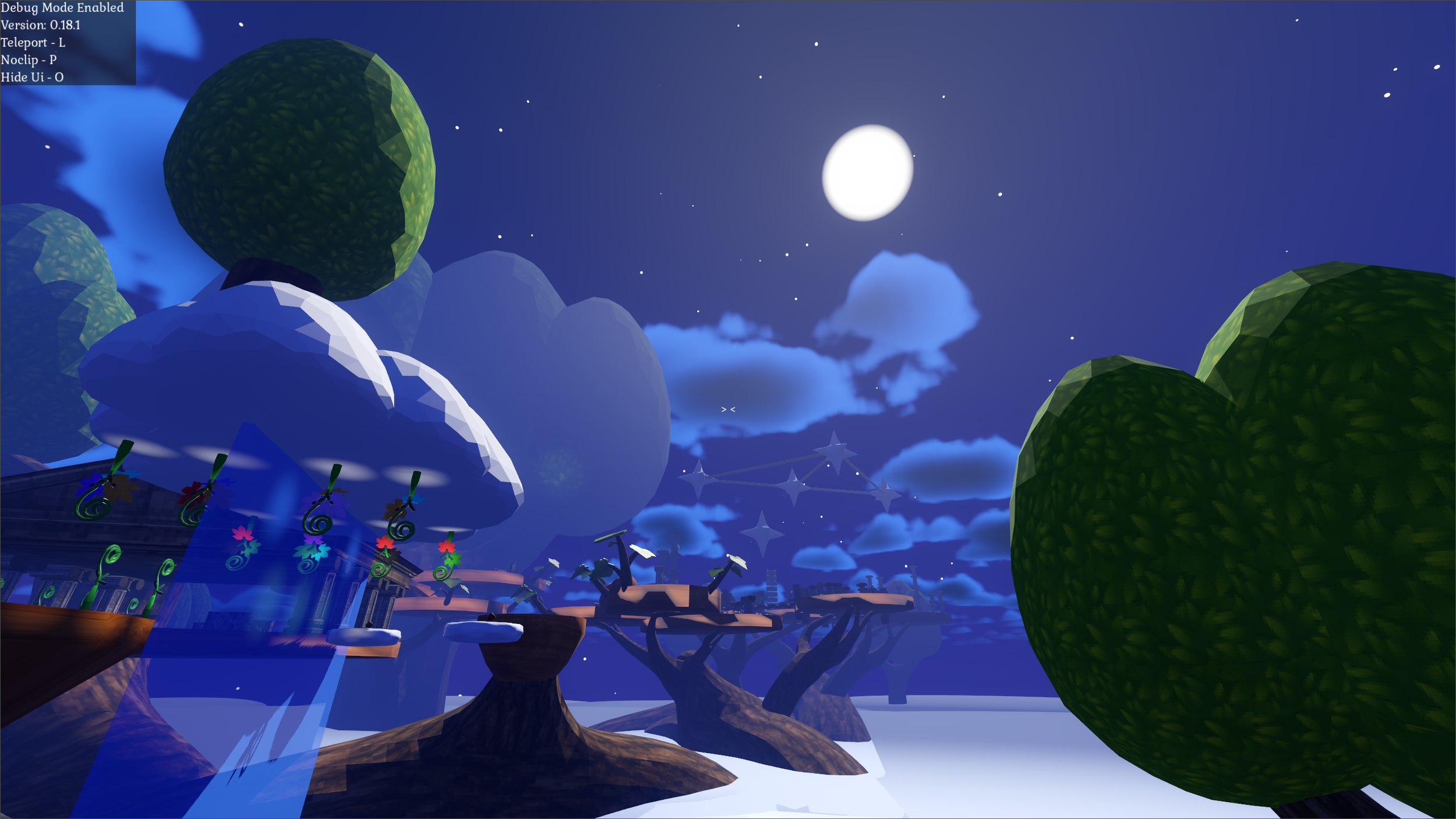
The Lost Lunch - Indie Puzzle Game - Level and Puzzle Design
Engine: Godot 4.3/Blender - Timeframe: September 2024-May 2026 (part time with SFS, full time remote with PlayQ on Treasure Party) - Team: Stellar Forge Studios - Link: Steam Store Page
After creating a visual novel for Vtuber Rin Penrose, Stellar Forge Studios decided to come up with a new IP with the goal of shipping and selling a full commercial game experience on Steam. I have been a part of SFS since we started and I contributed level blockouts, puzzle designs, ran playtesting, Q/A, and marketing materials for the steam page launch, all for The Lost Lunch.
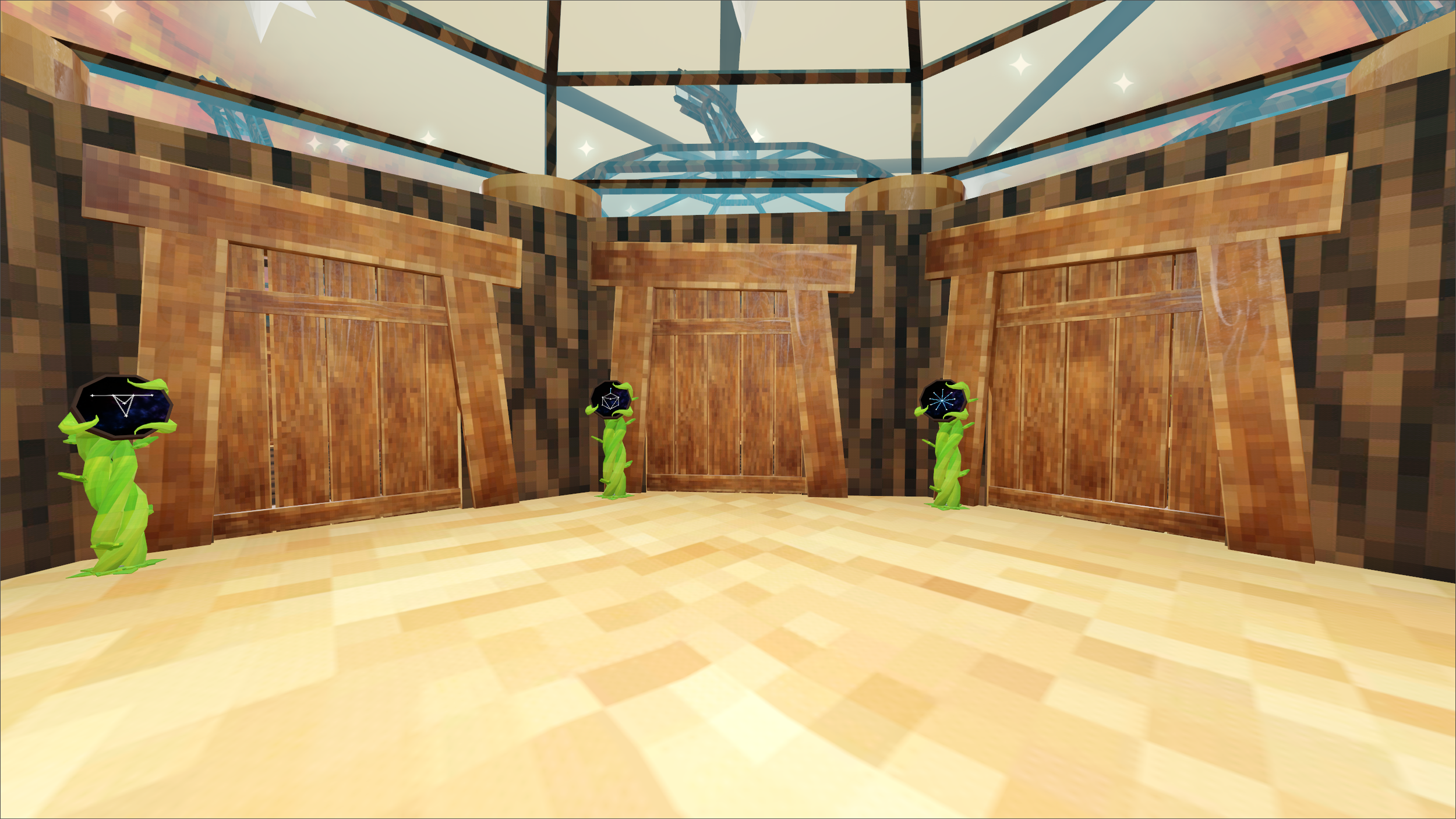
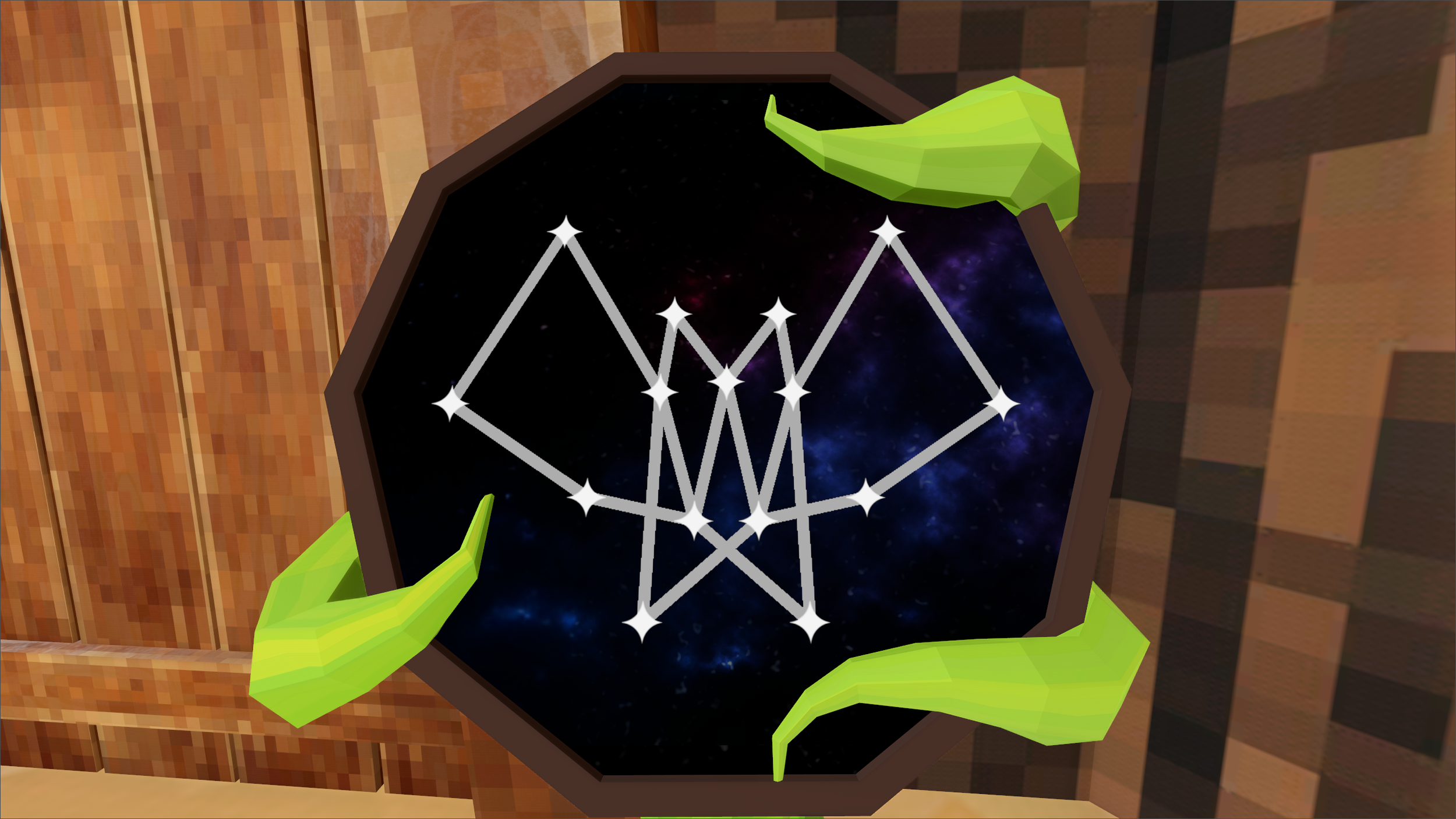
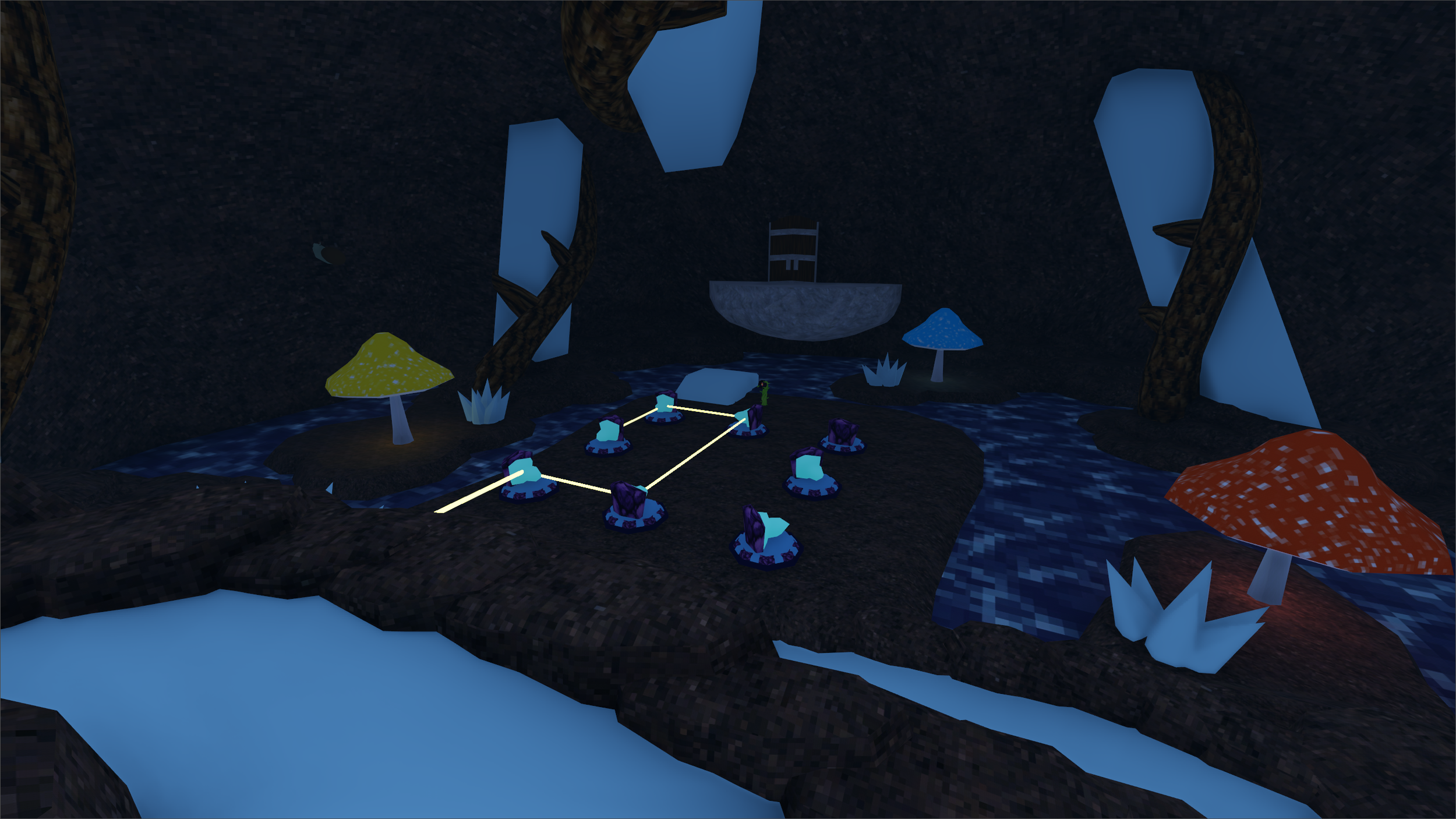
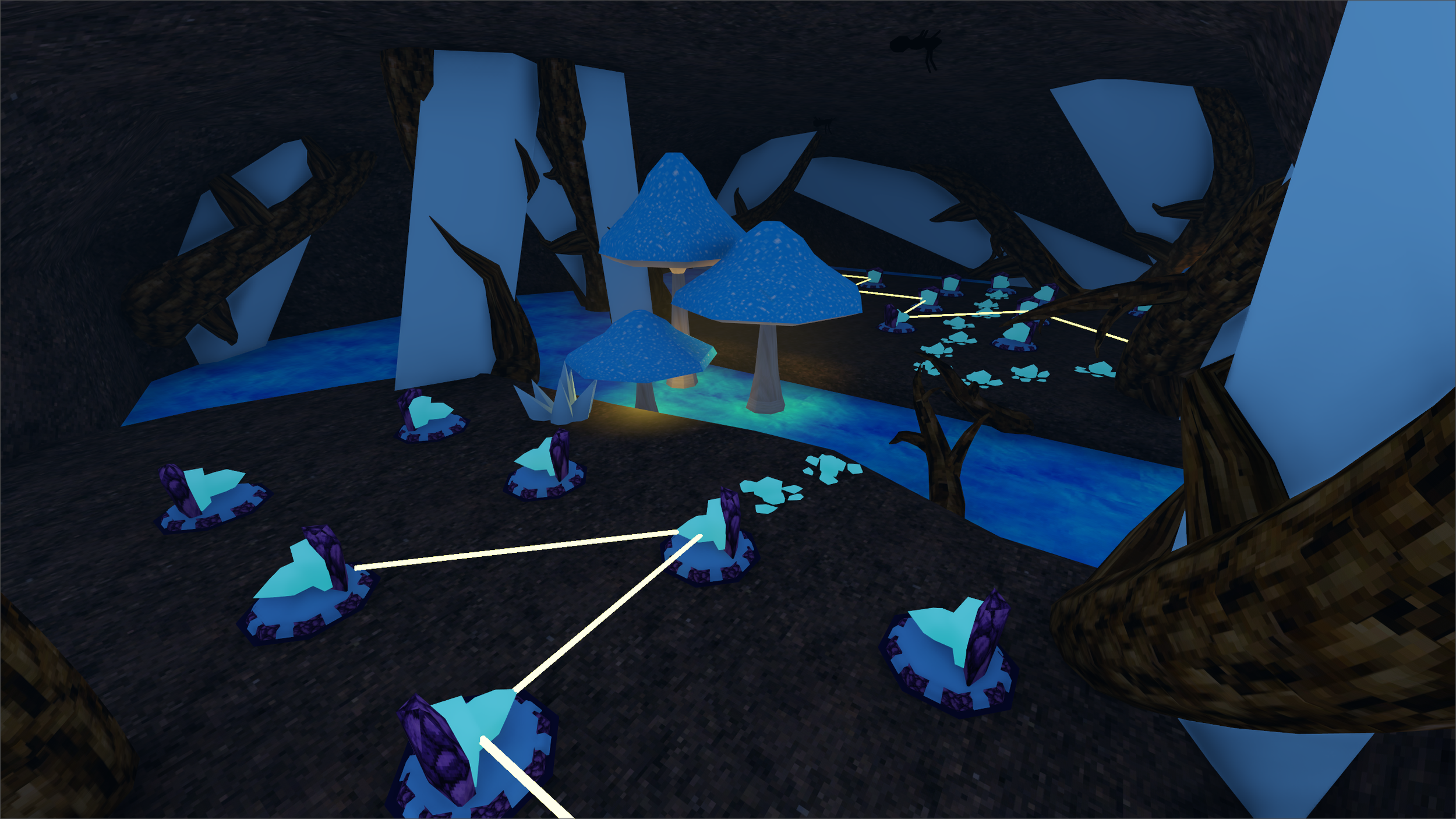
The Lost Lunch was created from a rough prototype phase where we were unsure what to keep developing. After deciding upon an environmental puzzle prototype we went ahead with it, and after about 5 months I was able to see what a complete level was in our game. The final product is a linear adventure where you play as a squirrel climbing up a magical tree to deliver a lunch to your son that he forgot. There are 5 distinct environments, with sub levels, each having their own 1-2 puzzle mechanics. Each level is a enclosed space designed to keep puzzle mechanics clear, and to be efficient with art assets to allow us more levels and puzzles.
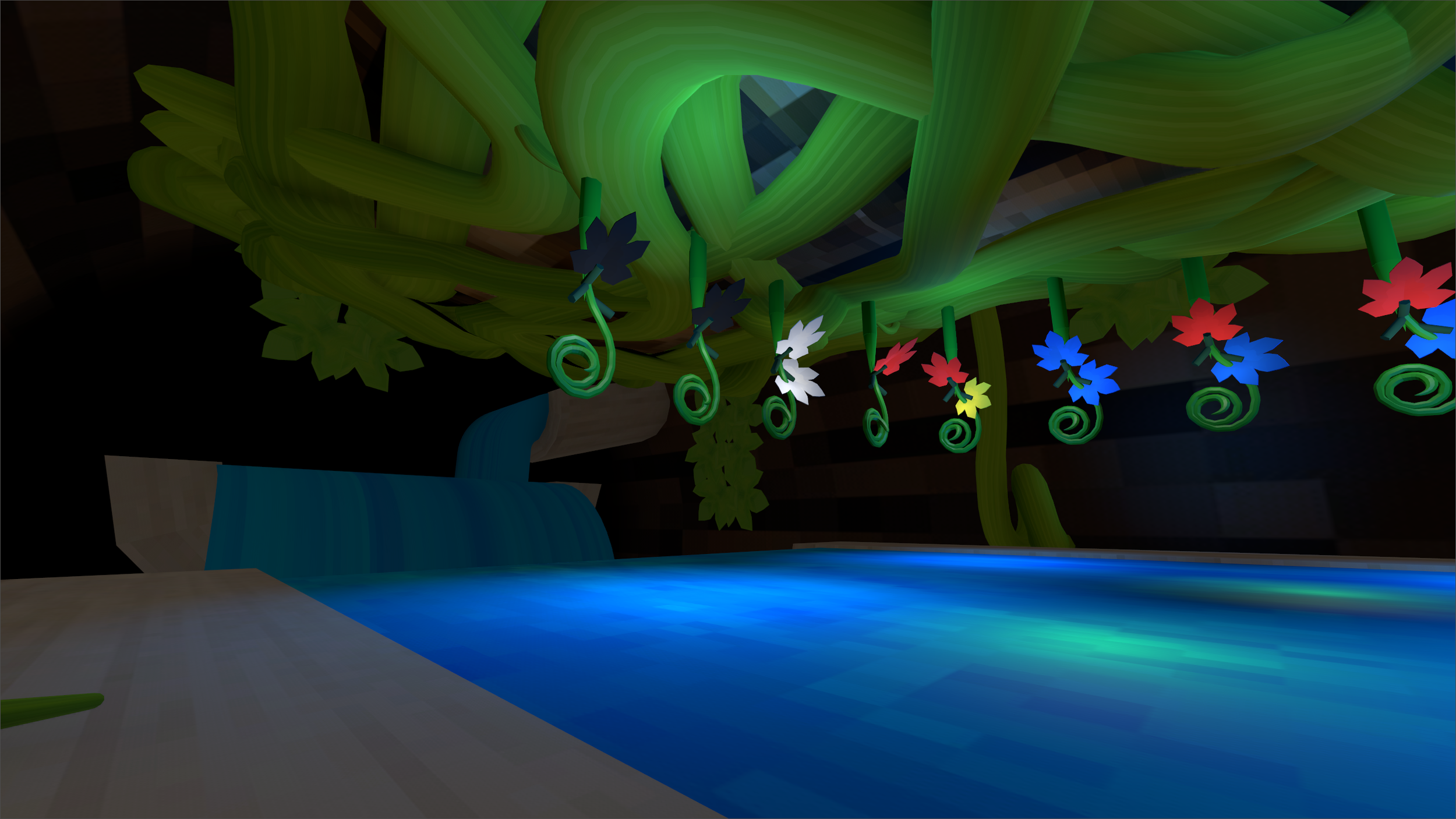
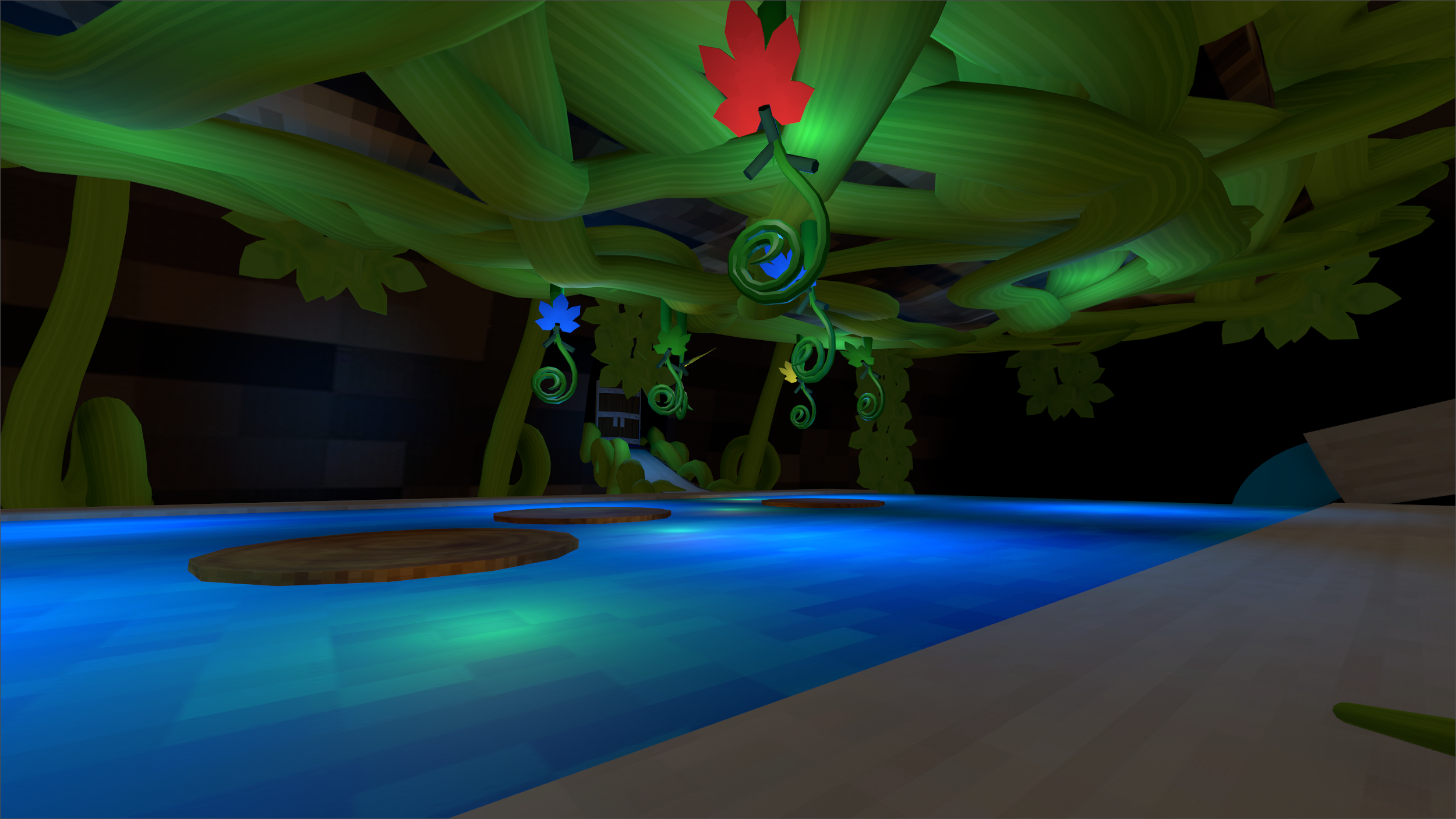
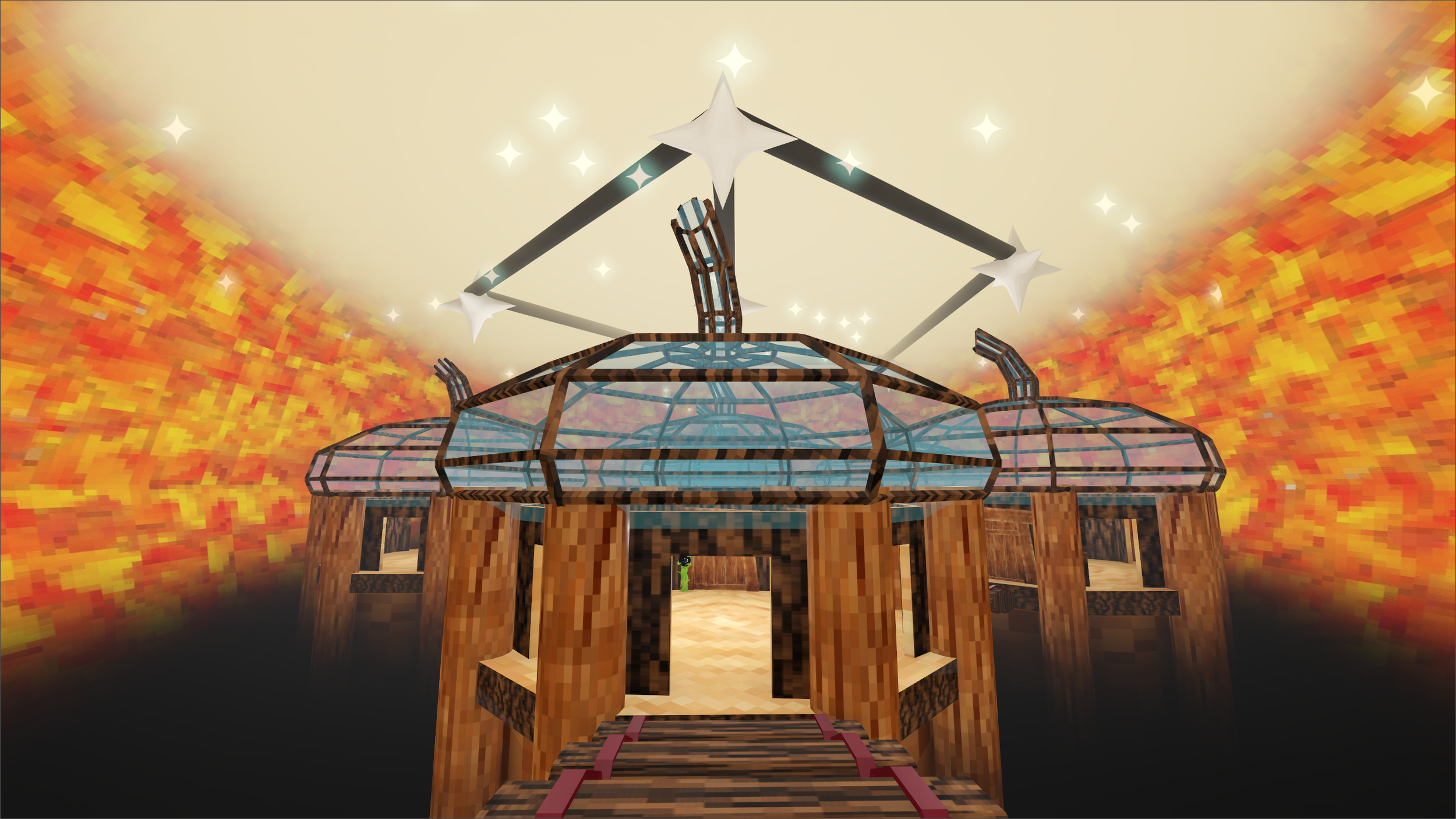
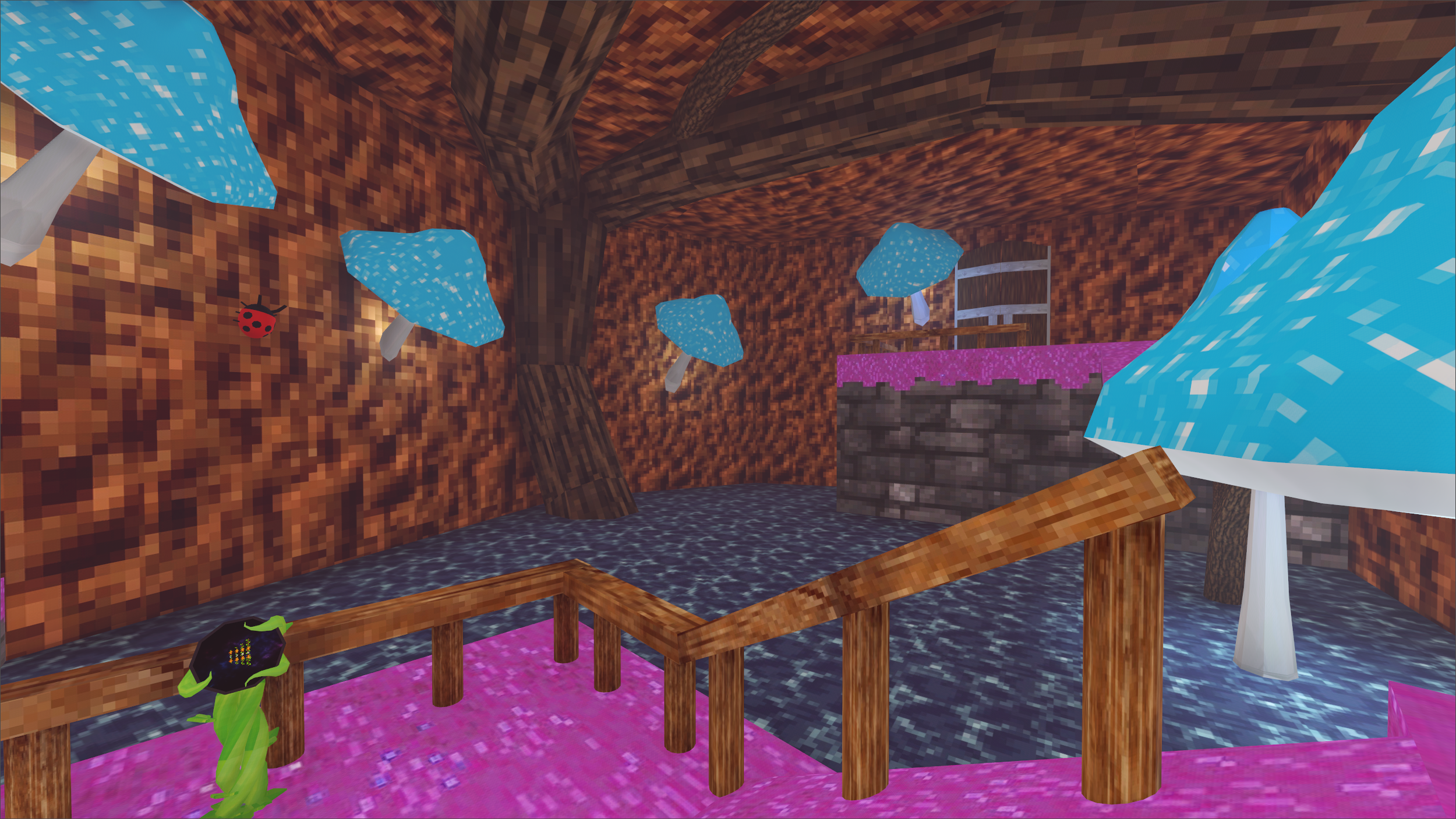
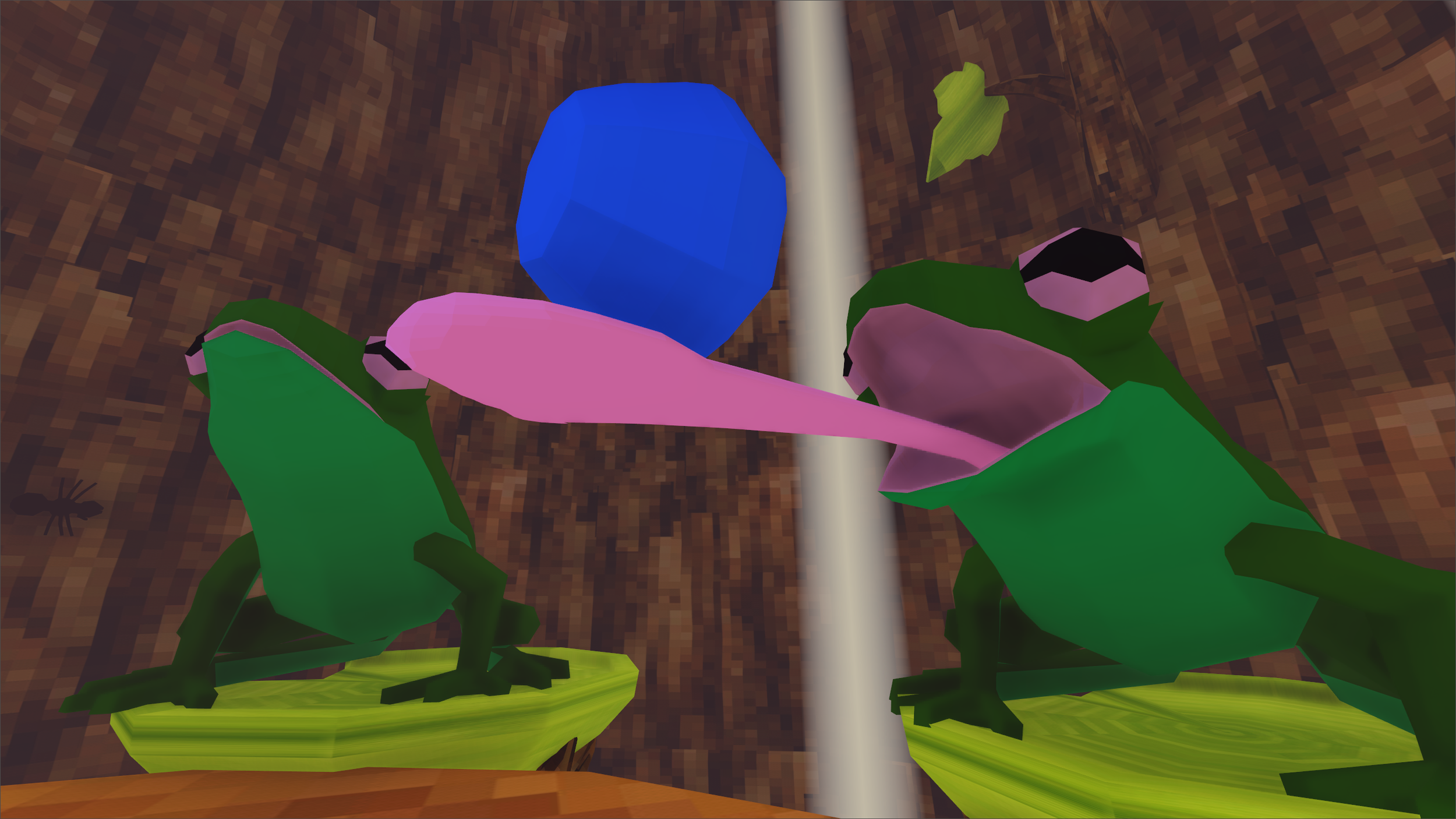
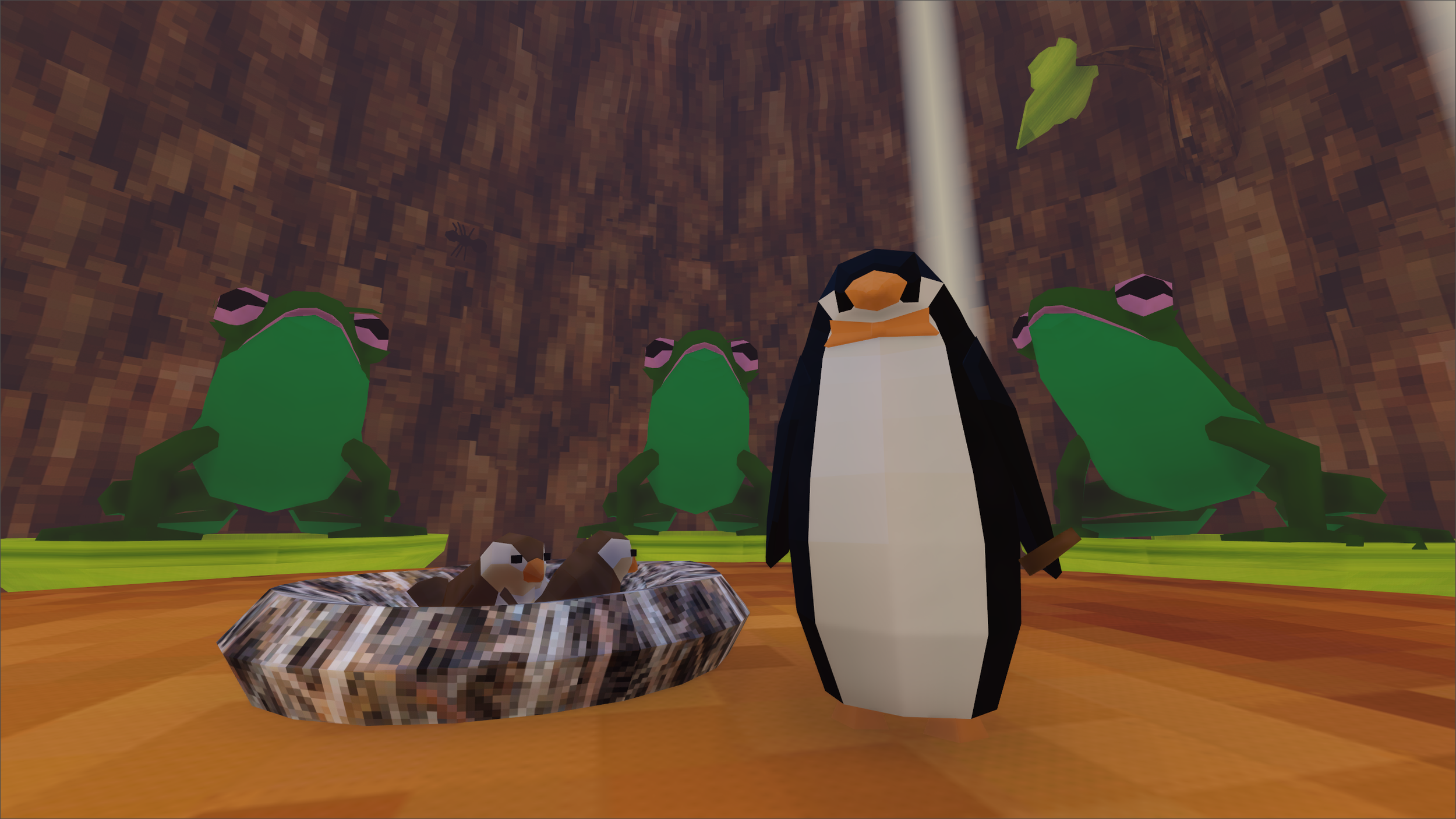
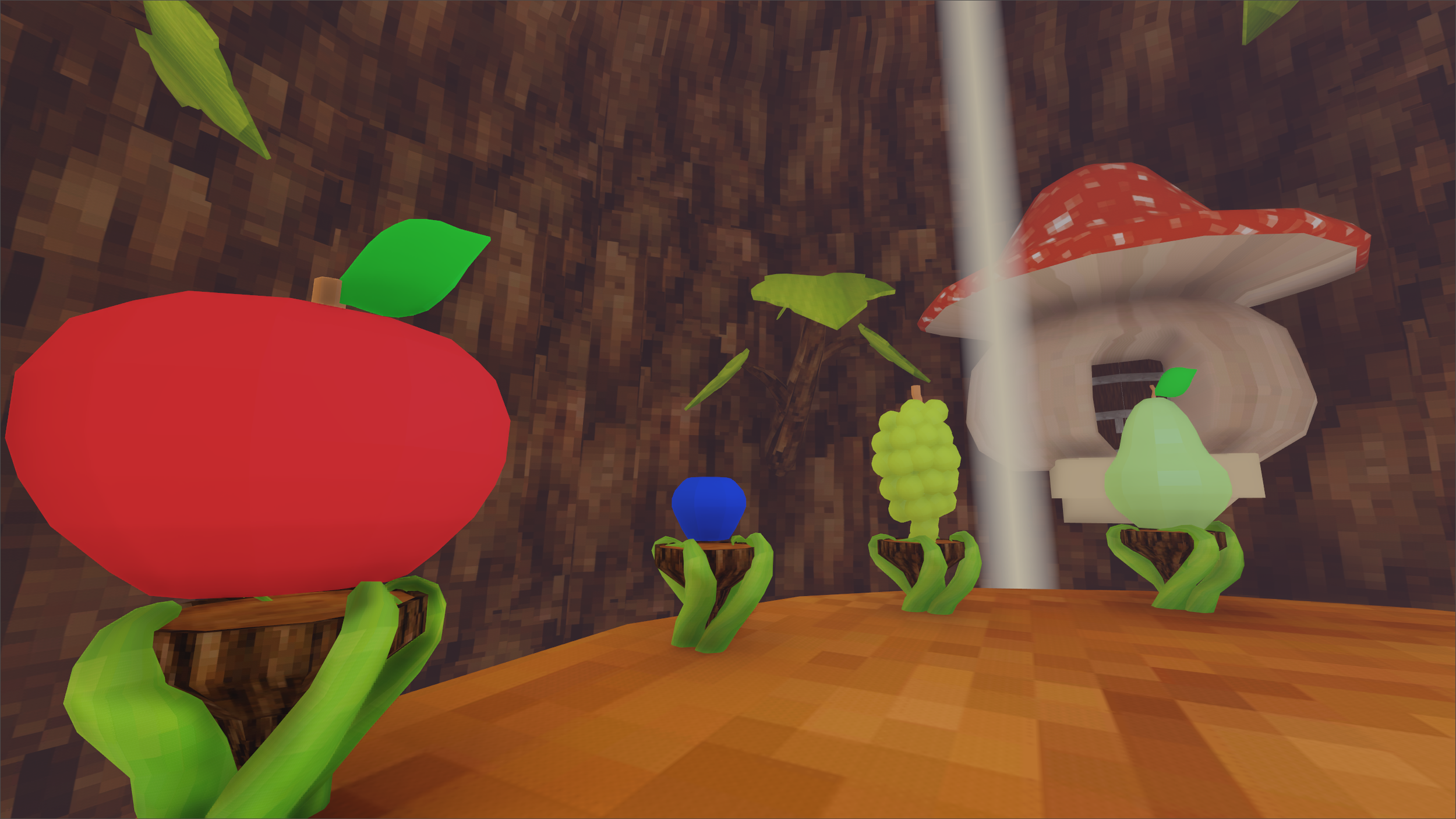
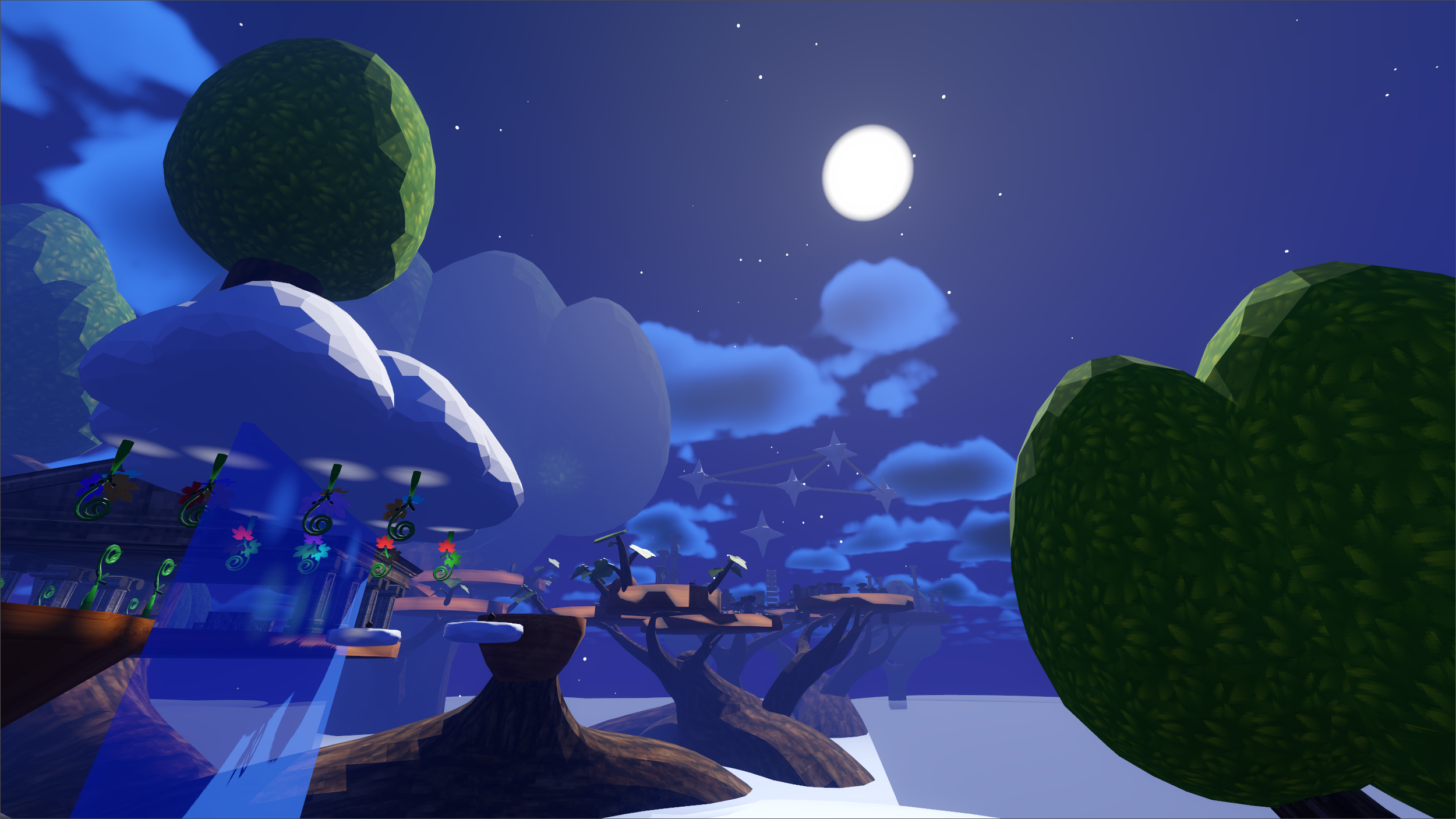
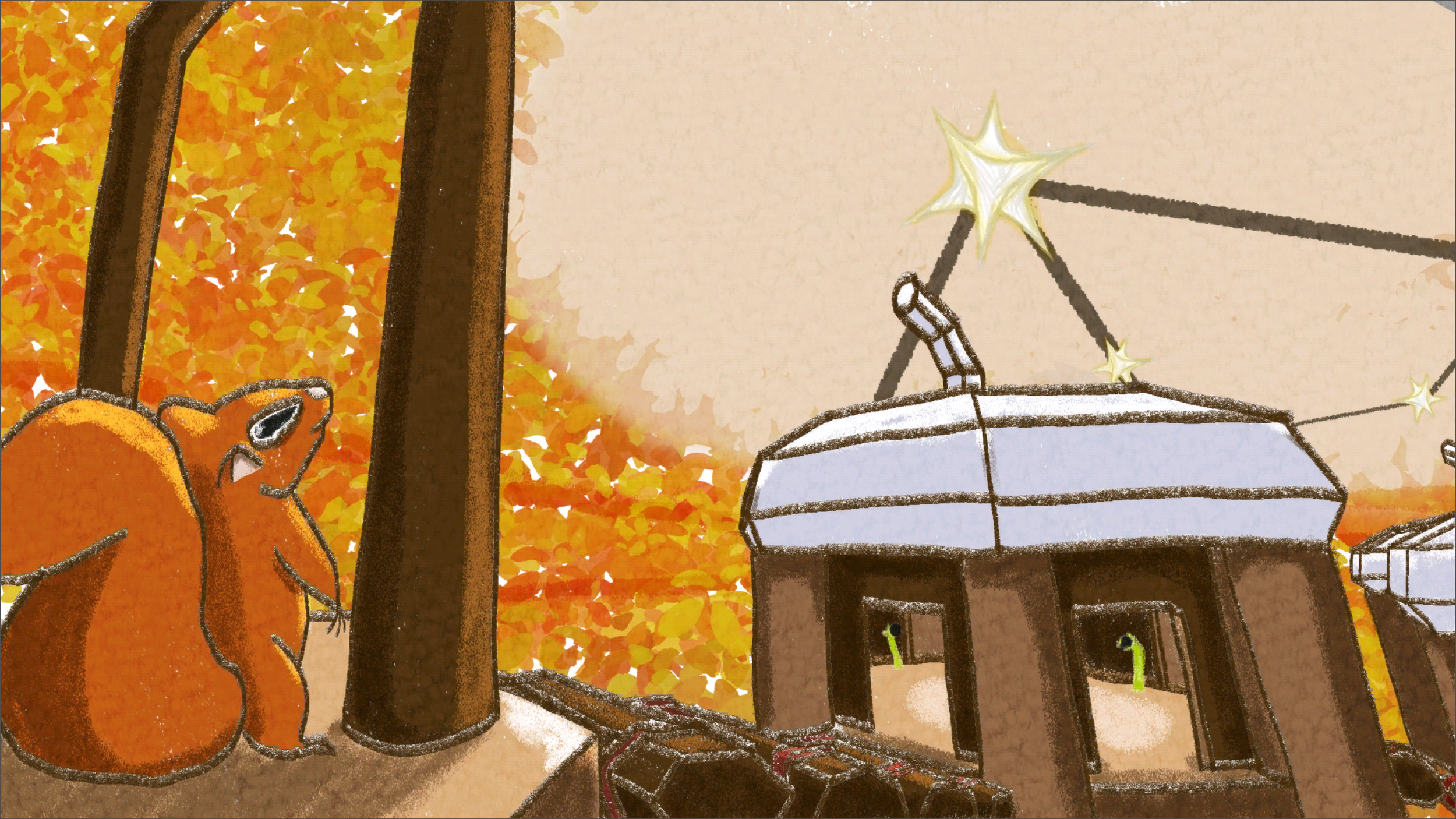
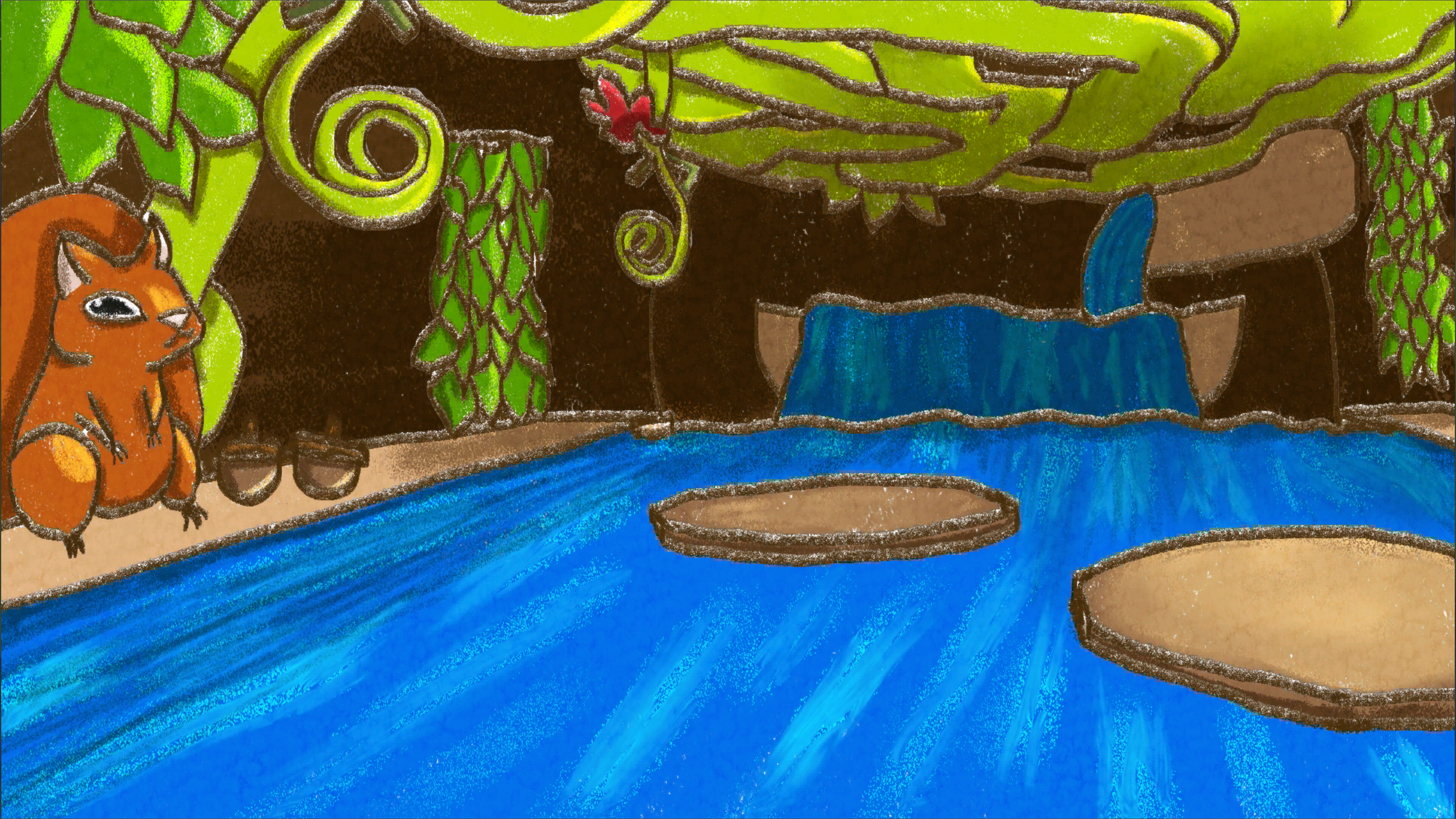
Mid Development Raw Playthrough
This footage gives a clearer view of my blockouts. Our pipeline was to first blockout with CSG (basic colored shapes) in Godot, playtest to make sure gameplay fit the space, then export the CSGs to Blender for our Artist to use as reference to model final assets. Using version control and Godot’s Blender support we could quickly update a .blend file and have it automatically update in Godot as a .gltf. We have a variety of modular assets, gameplay specific assets, and large environment bounding models.
Pitch Decks/Ideation Phase
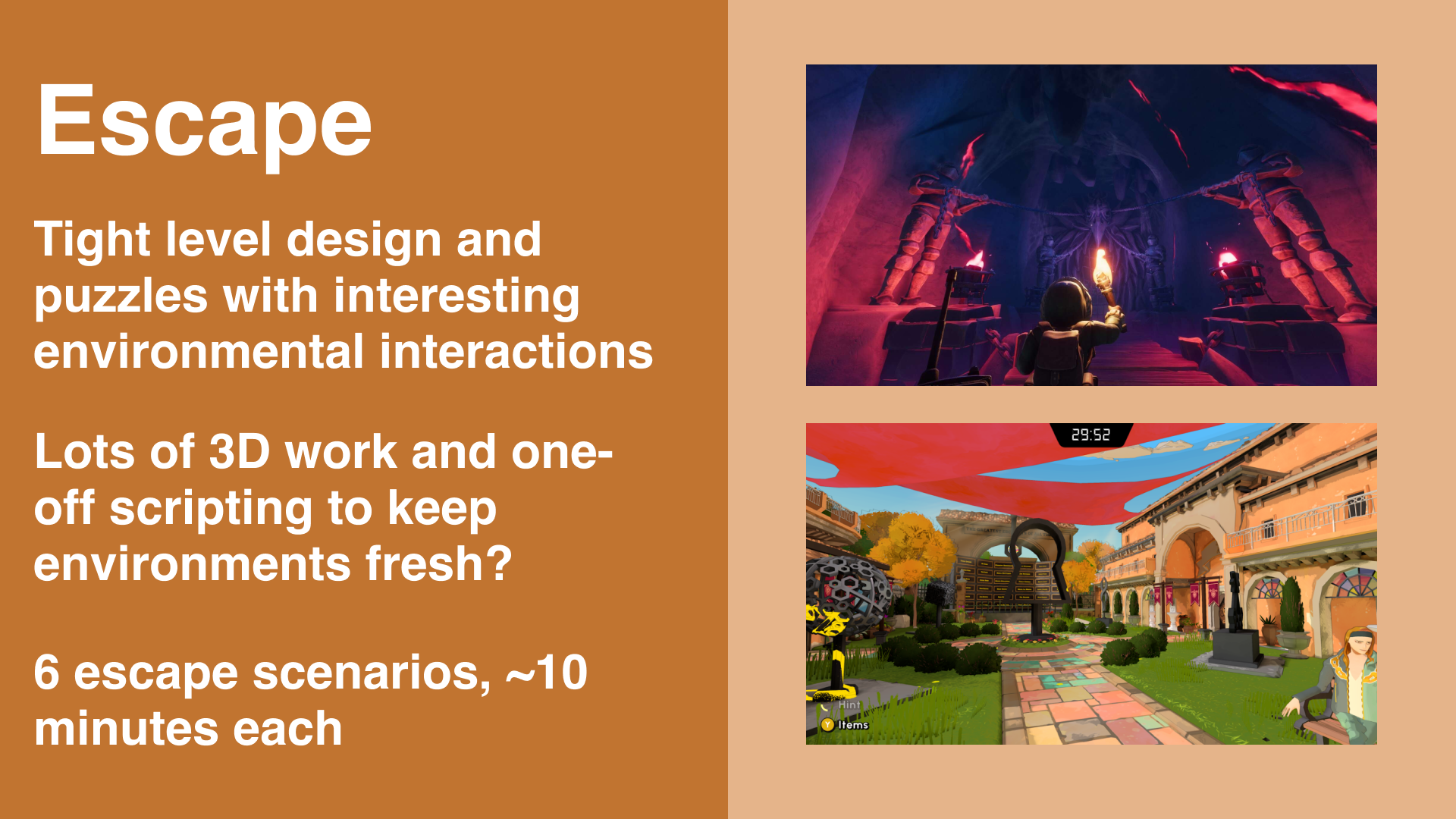
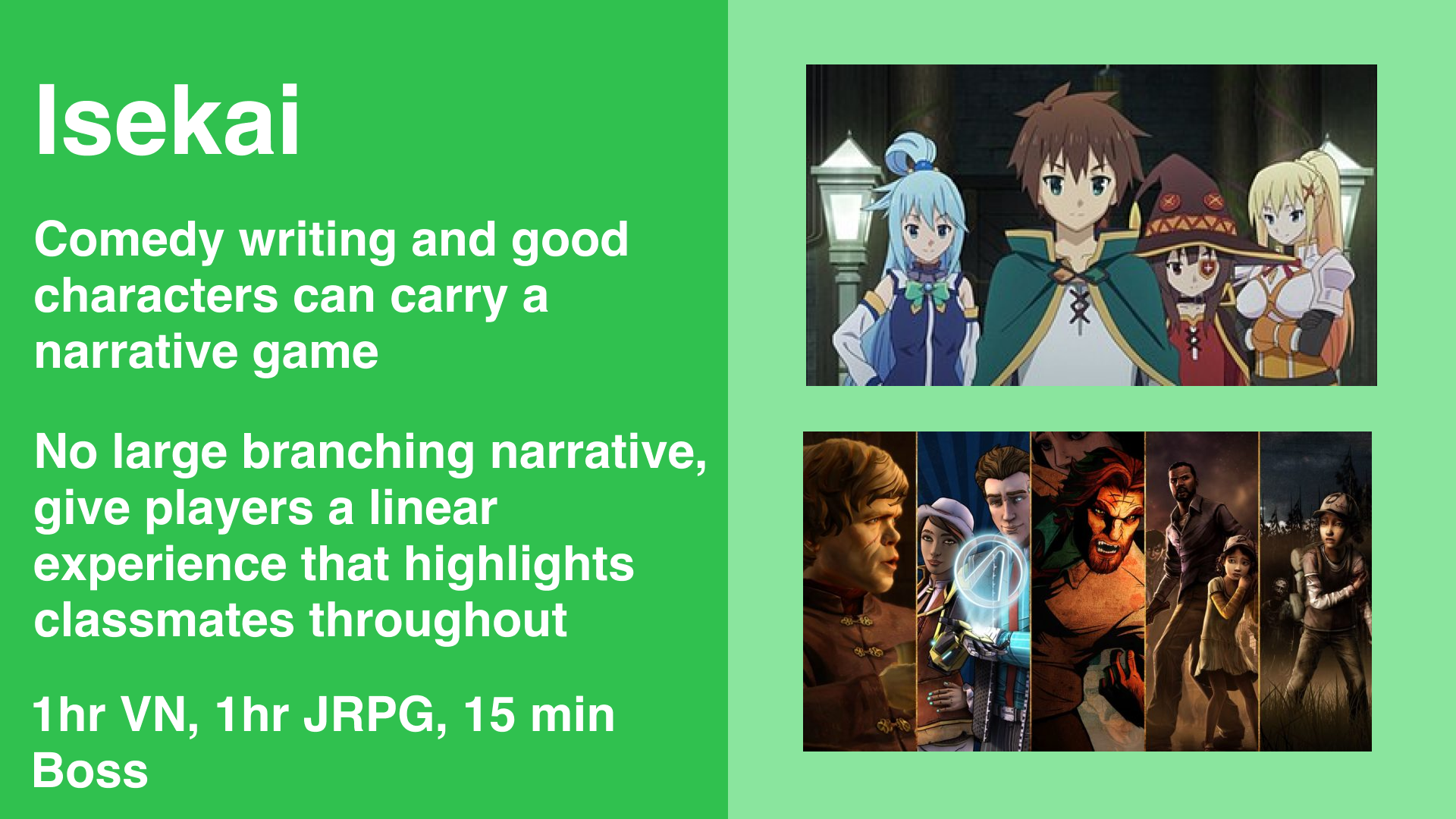
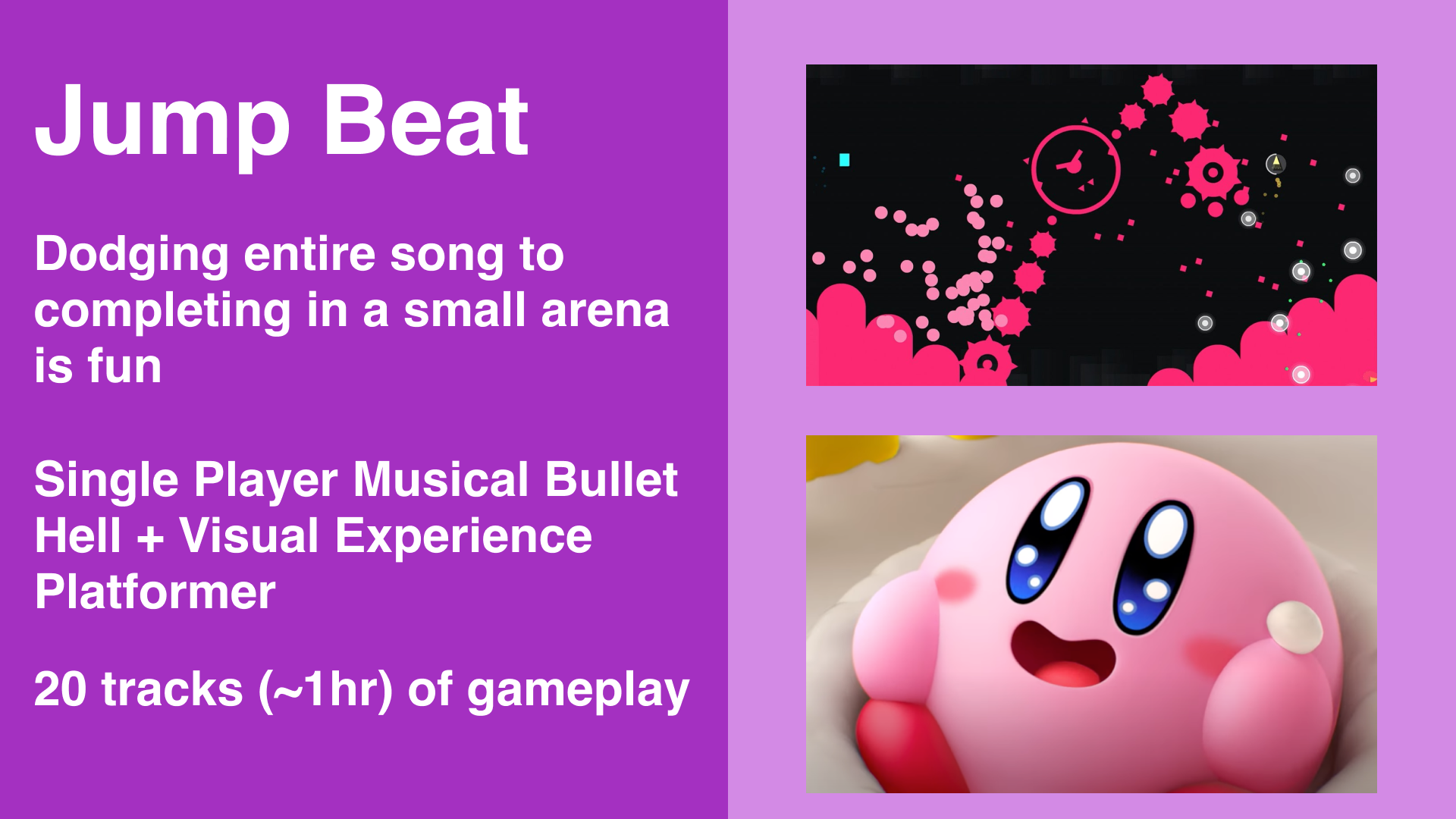
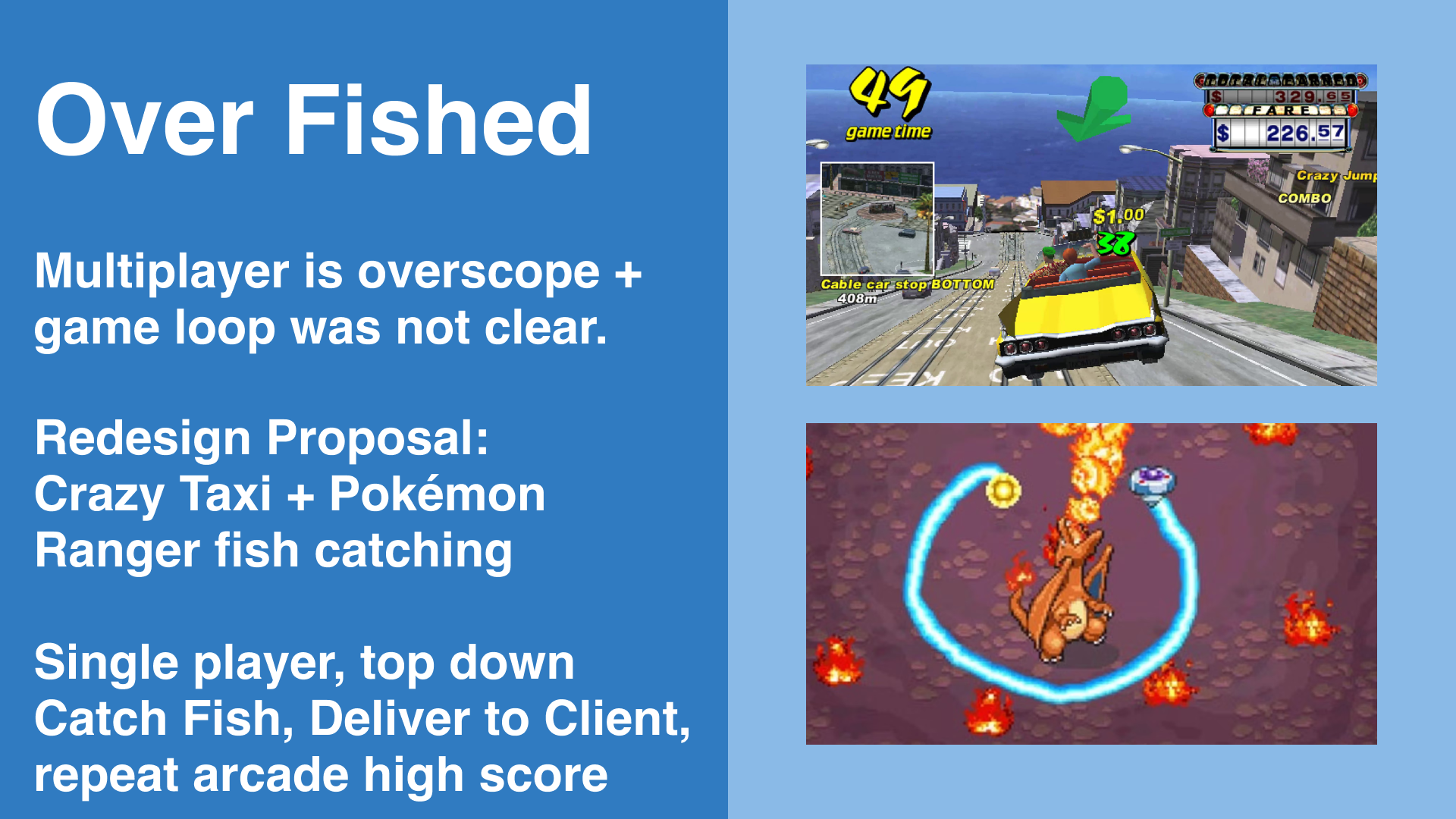
At the start of our prototyping/ideation phase in summer 2024 I made 4 single slide pitches based on ideas the team talked about. We created 4 different prototypes over about a month based on these general ideas.
Prior to these prototypes we were trying to build a top down 2D roguelike which we dropped. From my perspective we had no clear 1 voice on the project and too many critiques on others work when we should have just made a bunch of things and throw it all together, not worrying about a cohesive vision at the ideation stage.
These 4 prototypes were interesting in their own ways. I still think Jump Beat can be its own game, and Isekai would be popular if the writing and art was great. Over Fished was my original idea which I then passed to a programmer for them to prototype. This was a mistake on my part. I should have prototyped my own idea instead of giving it to someone who did not have an idea for what the gameplay loop would be (of course not their fault!). Also trying to explain design in prototype stage is just slower than making it myself to show the design.
Escape was the prototype we went with, but this prototype was a demo scene in a larger Godot game framework called Cogito. The demo scene showed Cogito features in a 3D office room where the player had to interact and pick up items in the room to open secret doors and escape. I would have liked this prototype to be build out more so we could have a clearer view of what the game could be, but a few months later I was able to see how our levels would play out.
Overall the ideation phase was scary and stressful, but also fun and creative. I feel better about being loose and not super serious during this phase now, and will make sure future teams are also comfortable in this chaotic but fun stage. It’s mainly about finding a fun mechanic, figuring out a fun way to deliver story, really focusing on one interesting part of the game to show it working, while ignoring all other parts to a point.
To Be Added: Upload the prototypes onto itch